

Installed +4 degree timing plate and now have an oil leak

Chikara

Well-Known Member
Joined
Mar 1, 2011
Messages
94
Reaction score
0
Location
Jackson, MI
Hi guys. How are you all doing? I've been off the forum for quite a while because, well, I live in Michigan and my ZL9 has been in storage forever.

Anyway, I bought a +4 degree performance advancer from MCM last year but never got around to installing it. I did it a couple of days ago and noticed when I pulled the cover off that the old gasket (looks like the cork kind) was stuck to both sides--the plate and the housing--but it was in big chunks that simply did not want to come off. I tried my best scraping with a scraper and with a knife but my best didn't seem good enough because there were still chunks of it on both sides.

I replaced the old timing plate with the one from MCM and then replaced the cover with a new gasket. After doing so, I ended up with oil leaking from between the cover and the engine. I then removed the cover and took my dremel with a wire brush and buffed the remaining pieces of gasket off. This may have been a stupid thing to do but I'm not very experienced with this stuff, so it seemed like a good way to get the gasket off. I also checked the new gasket for damage and it seemed to be clean and scratch/dent free.

I have replaced the plate and the leak is much smaller, but it's not completely gone. I don't think there is any more gasket I can remove, as I was seeing silver all around. Now I'm wondering if maybe I didn't screw myself and now there is nothing the gasket can do for me.

I have a couple of ideas of how to remedy this, but rather than spinning my wheels, I thought I'd ask for some opinions.

My ideas are:

1) The gasket I bought was really thin and kind of cardboard-feeling. Would buying some thicker cork-type gasket material and cutting out my own gasket help?

2) Should I use the same gasket but add a bit of gasket sealer to it?

If any of you have experience with this or if you have a good way of sealing up an oil leak, please let me know. Also, I am open to any and all beratings for using the dremel.

 
Before you try using the cork stuff, depending on how bad the leak is, you could try usiing 2 standard gaskets. If you use some sort of sealant you could try something like Seal All or Hi Tack. I would pull the cover back off and inspect both surfaces carefully and make sure they are both clean and look for gouges, etc' If you are careful, you can use a Q-tip dipped/soaked in carb cleaner and that usually helps with the cleaning process - but be careful of the paint - tape it off or something. Then go from there on what combination of gaskets/sealant to use. Also go to the local Auto parts store or I believe places like Rural King, and you can buy gasket material in different thicknesses (made for oil and gas areas) to make your own with - I would use that before I would use any type of cork material. Good luck. Later.
 
The downside of gasket sealant is - what you started with!! I agree with Jarney, try two stock gaskets; failing that, follow his recommendation on making your own.

Another option is to take a good metal ruler, place it along each edge of the cover, hold it tightly in place, and shine a light at the outside bottom side of the ruler where it contacts the cover. [gives you maneuvering room with the flashlight]. Should show any gaps that may be there. If it's not too bad, you may be able to level the cover and remove the gap with a metal file [gently, this is aluminum]. You can try this on the engine side, but a little tougher because of maneuvering room. Also, would be filing on the engine side; if you screw up the side cover you can buy another - replacing the cases is not as easy.

For me personally [no offense MadMan], Form-A-Gasket would be a last resort. While it would probably work, I've seen pictures of oil screens where some of that type of stuff has broken loose on the inside and gotten down to the pump. These bikes have enough oiling issues without extra debris in there.

Good luck and keep us posted.
 
An old trick that engine builders use: Go to a hardware store, wal-mart, hunting store etc, and get a two side sharpening stone for knives. The two sided ones have a coarse and fine side to them.

The problem is when scraping with razors or gasket scrapers, dremel etc. it is possible to gouch a section and produce an uneven surface. Then when you apply a gasket it might now fully form a proper seal. This may have been a pre-existing issue if somebody used a cork gasket...Cork is a little thicker and more forgiving to un-even surface unlike the typical paper gaskets we see commonly.

So remove the cover again and set it aside...Dry the area of any residual oil and stuff it with paper towels, rags, something as to not get crap into the engine as shavings will be attracted to the magnetic CDI pickups.

Now start with the heavy side of the sharpening stone and sand down the surface evenly. The idea is to cover as much of the surface at one time as possible and do it evenly. Then turn the block and do it cross-wise from the area you just did. Use little force and let the block do the work for you, if you use excessive force on one area and not enough in another you will just have the same problem and waste time.

Once that is done do the same with your cover...Then switch to the fine side of the sharpening block and do the same and any swirls or scratches should start to go away. If you want to get REAL fancy you can then wrap the block in very fine sand paper designed for metal surfaces like 2000 grit or something and make it even smoother.

That should solve your problem and allow the use of a regular paper gasket
 
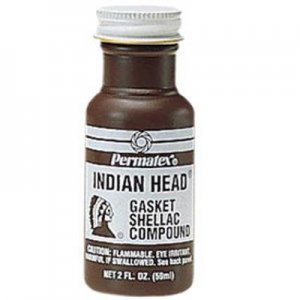
If you have an uneven surface on the block side I would recomend trying two gasgets and a solid drying gasget sealer (Indian Head would be my choice ) or simply cutting your own gasgets out of thicker material. Form a gasget is by far the worst thing IMHO to use as it breaks free and gets everyplace inside the engine. If you must try some sort of gasget forming agent they make something called the "RIGHT STUFF" wich actually dries solid compared to permatex and dosnt break free nearly as much. Be advised it is a little harder to work with compared but in the long run anything besides permatex will be an advantage!

If the cover is the culprit you could simply get a new cover.
 
Mudrunner also has a true cure wich I have used. I also have a machined block that I can attach a file to that will ensure a smooth even surface I honestly dont recomend the first timmer to attempt this on thier expensive toys. Take the time to learn on an old head from a lawn mower or something as it is easy to mess things up worse especially if you dont have an eye for it!
 
Thanks for all the suggestions, guys. As usual, you all came through. Now I have a few ideas to sift through and make my choice. Some of my thoughts on the replies are:

1) Form-a-Gasket - this (or something similar) was one of my ideas but I, too, have heard horror stories about it breaking free and clogging oil screens so I was a bit leery. Rather than making a gasket, I might be OK with using a small dab of something to seal the paper gasket, but don't know if it will do the trick.

2) Cork gasket. There seems to be a consensus that cork isn't the best way to go. My concern with it was that cork is what caused my woes to begin with so I would probably end up with the same problem next time.

3) Double gasket: I could order another gasket and double up on them, but it would take days and I am leaving for a two-week vacation in just under a week, so that would leave me without a ride for three weeks. Not sure I want to do that.

4) Knife sharpening block: This one scares me. I may have caused this myself by using the dremel to get that stubborn cork stuff off. I think it leaked the first time because of the uneven surfaces with all the big chunks of cork. Then I think it leaked the second time because I had to use my dreml and wire brush to scrape it all off and may have left it a little uneven. If I use the sharpening stone and screw it up, I'm toast!

I think what I'm going to try is to buy some slightly thicker [paper] gasket material, use my stock one as a template, and try to cut my own and see if that helps. If I prove to be inept at cutting one to exact specs, I'll order another stock one and double up, but I think I should be able to cut it close enough. Hopefully that will help.

Thanks again for all the great suggestions. I'll check back in and let you know how it goes.
 
Yeah, there's nothing major going on in there really so you can be a little sloppy on the inside cut and it shouldn't affect anything - the outside cut if done sloppily will just look bad. Good luck. Clean everything on the outside real good this time and if it leaks again, use a flashlight or look close in good lighting and try to pinpoint where the leak is coming from - then you could use some sort of sealant just in that area - might be worth trying this first with your original gasket before you make another one - about the only place I will use a little sealer is where the electrics (wires) come into that area - there's a sort of rubber plug where they come in that can get a little wallered out. Later.
 
Added thought on using a file or stone, if you use one long enough to cover about 4" of the sealing surface at a time; you could go in two different directions to form an 'X' pattern - anywhere the 'X' is missing will be a low spot. This is literally just scratching the surface of the material, and won't cause a leak, but at least it should tell you where the problem is.

One final thought, when you put the cover on did you follow a crossing pattern when tightening the bolts, like when tightening head bolts?
 
Added thought on using a file or stone, if you use one long enough to cover about 4" of the sealing surface at a time; you could go in two different directions to form an 'X' pattern - anywhere the 'X' is missing will be a low spot. This is literally just scratching the surface of the material, and won't cause a leak, but at least it should tell you where the problem is.

One final thought, when you put the cover on did you follow a crossing pattern when tightening the bolts, like when tightening head bolts?

Yeah that is what I was trying to explain. Most of the stones are about 6" long at least and you can cover a good surface area all at once to prevent uneven.
If nervous you can get a flat ruler or a square and then slide feeler gauges underneath to see where the surface is uneven.

Of course this method is time consuming, but I figured you might want a permanent solution instead of always having to double up gaskets or use sealers and stuff. :thumbsup:
 
Pull the rubber at the pickup wire and make sure its not cracked or pinched, that will cause a leak.
 
Thanks for all the suggestions, guys. As usual, you all came through. Now I have a few ideas to sift through and make my choice. Some of my thoughts on the replies are:

I think what I'm going to try is to buy some slightly thicker [paper] gasket material, use my stock one as a template, and try to cut my own and see if that helps. If I prove to be inept at cutting one to exact specs, I'll order another stock one and double up, but I think I should be able to cut it close enough. Hopefully that will help.

.

I think this is your best solution for right now. During the winter when your not running the bike would be the best time to try actually straightening it withy a stone or file.


Buy yourself a good hole punch and an X-acto knife for making gasgets they are a welcome addition to any tool box when it comes to this task


Indian Head wasnt always a permatex product but thankfully they havent messed up the formula yet.
 
Back
Top