Body (plastic) repair

RickZL

Well-Known Member
Joined
Jan 22, 2007
Messages
34
Reaction score
0
Location
Netherlands
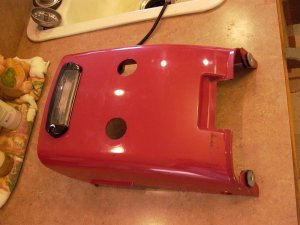
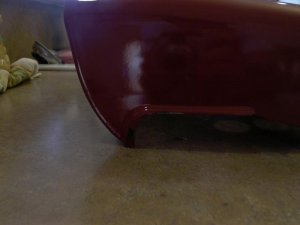
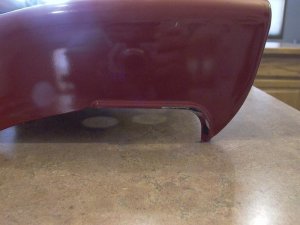
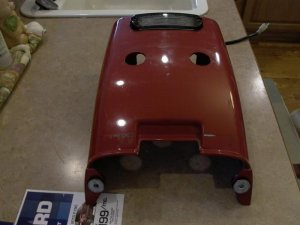
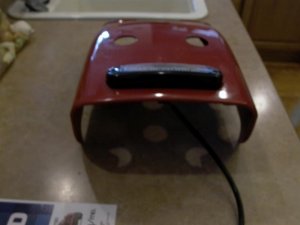
The plastic body of my red ZL900 is torn, it is the part just between/under the buddy seat and the backlight, right the plastic part and not the ducktail.

Does anyone have experience with repairing this part? I've read several articles about how to restore it but it very much depends on the material it is made of, for example ABS or PC or PVC or even GFK.

Do you know what material te Eliminator body is made of and any suggestion how to repair it?

Greetings from soccer loving Holland,
Rick
 
Well, the best answer is to find someone with a "parts" bike and replace the part. If a repair is the only option then I would use epoxy glue. I would glue it and clamp it if possible and smooth out a seam of glue on the top and bottom. Then, after it was dried and cured, I would leave the clamp on and sand the repair smooth using 400 wet paper, then 600 wet, then primer and paint. BTW, primer can help fill in
tell tale lines if you sand it carefully with 600 dry.
 
Last edited:
Right, thats advice I can work with. But does anyone knows what kind of material is used, PVC, ABS or another kind of plastic?

Thanks in advance,
Rick
 
I'm not sure what type it is, however I have played with repairing platic Nylon (Nylon is very, very, very hard to weld together). But anyway check the link below, it showes you the easiest method to figure it out.

[ame="http://www.youtube.com/watch?v=iv_SpbqyQvI&feature=related"]Choosing Type Of Plastic Rod[/ame]

Let me know what type of plastic it is once you figured it out please.
 
Right, thats advice I can work with. But does anyone knows what kind of material is used, PVC, ABS or another kind of plastic?

Thanks in advance,
Rick

A majority of the hard plastics used on all bikes is ABS. That means it is easy to fix... to an extent. You can get up to about 80% strength using the method I've used and the guys at the shop used to repair plastics.

Get a wood burner or soldering gun, not a little iron like you'd use for small work, the old style Weller that looked like a gun. Get some scrap plastic from a junk cover. Then you carefully melt and sort of cross stitch the plastic along the crack and slightly beyond the end adding additional plastic from say an old Honda side cover - after all, that's all a Honda is good for, right? Maybe even a VMax tank cover! The contamination will only knock a tenth or so off your Eliminator's quarter. :rotf:

Definitely lightly sand and clean off the area to get rid of any substance that might affect the process. Get it down to clean plastic, then start the melting process.

We melted broken pegs back on that way too, including slathering on some of that black plumbing ABS glue, the black is actually melted ABS. But there's no substituting for the wood burner job.

The shop and a couple of the guys did a number of "totalled" sportbikes we got, sometimes even cutting and fitting pieces in where bits were missing. We always let the customers know the bike body had repairs, we didn't screw with our livelihood by misleading people. There was a couple of CBRs and an Interceptor I remember. Some customers bikes too.

If you're really careful and don't melt too deep you can actually repair a crack that's started, but not to noticable on the paint side without repaint. If you're repainting you can really plow on the plastic and make it strong.

I actually took a CB900 tail and added plastic to it to fit it onto a modified SR500 seat to blend it for an RS750 flat track look seat.

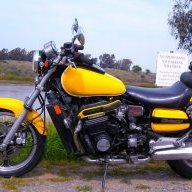
Here's a shot showing I welded in thinner stock, the second shot shows you can't tell where it was done from the outside after sanding and a spot of glaze for a few pinholes.

bikepics-2010753-full.jpg

bikepics-2010754-full.jpg


Under no conditions did we ever use an epoxy or any sort of glue other than the ABS cement on hard plastic body parts. It didn't adhere on customers' bikes and we figured why screw with what works for us to experiment with what didn't work for others.
Hope that helps a bit. Be careful and methodic and you'll do well.

 
Last edited:
They actually make a specific hot-air based plastic welder; had one years ago when in the car business. Harbor Freight carries them. The idea was to have something similar to a regular welding torch that could spread the heat around.
 
We talked with a lot of people back when the welders came out in the 80s. It's really difficult to use compared to the wood burner/soldering gun technique. They were a breeze to work with and keep the heat exactly where you want it. It was just a sort of criss cross pattern with the extra plastic bits down along the crack. Really easy.
 
I've had luck with the soldering iron myself. I even repaired a hing by welding plastic around a mettle pin. When you are done just remove the pin and the plastic will not stick to it.

I thought about buying that plastic welder from harbor frieght but now I'm thinking maybe not.

Mike
 
You guys have WAY too much free time.

Not really, when it takes an hour to do a "weld job" and a panel is anywhere from $25 to $500 it seems the "per hour pay" is pretty good.

Then there are things like my one-off seat work... They don't have that on parts bikes. :thumbsup:
 
If this will work for you, let me know. The paint is definitely not show, but also not bad. Dave
 

Attachments

  • P1020509.jpg
    P1020509.jpg
    56.2 KB · Views: 8
  • P1020510.jpg
    P1020510.jpg
    28.2 KB · Views: 7
  • P1020511.jpg
    P1020511.jpg
    48.2 KB · Views: 7
  • P1020512.jpg
    P1020512.jpg
    43.6 KB · Views: 6
  • P1020513.jpg
    P1020513.jpg
    27.1 KB · Views: 6
Back
Top